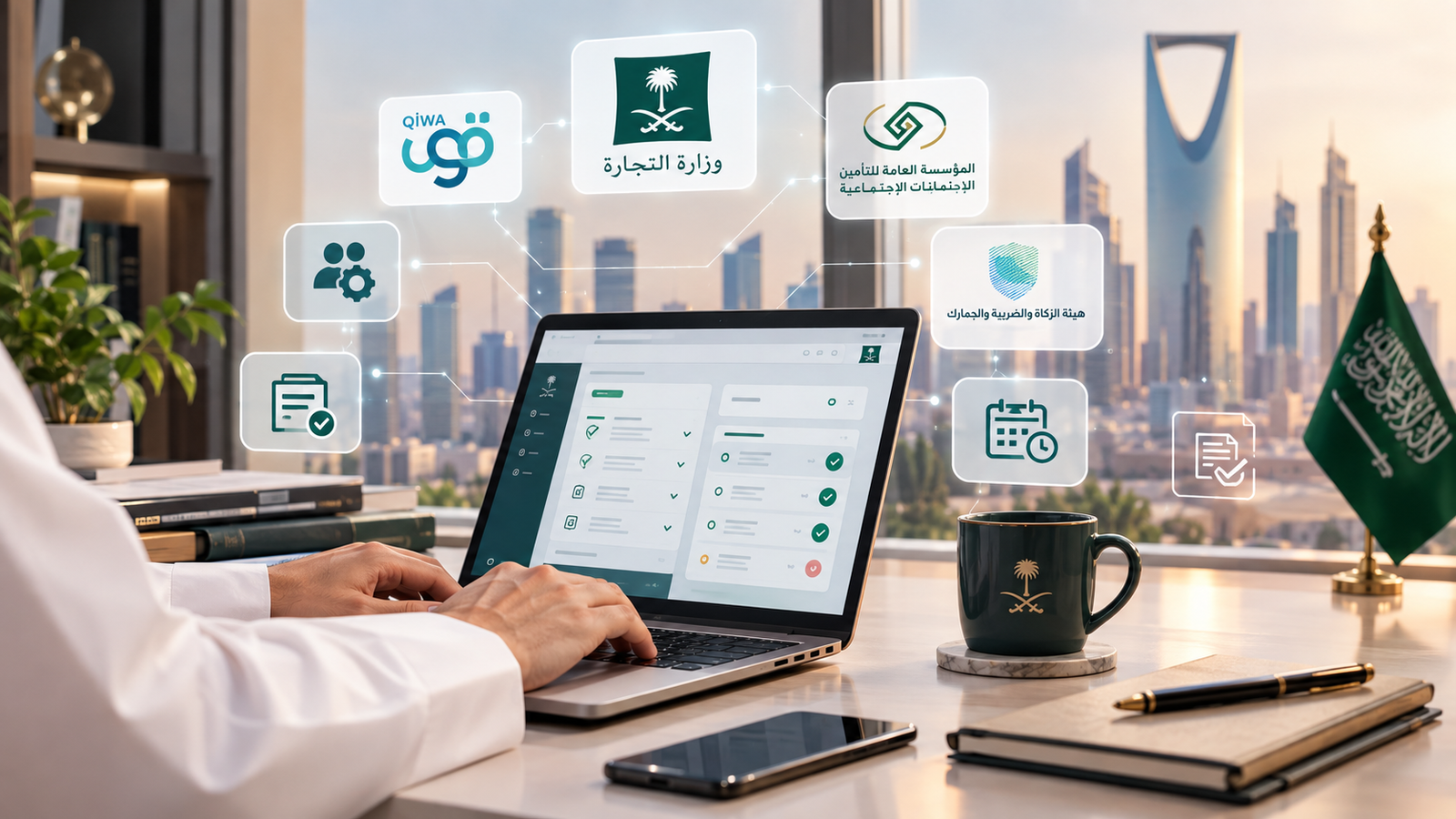


Government digital platforms have become an essential part of running businesses and companies in Saudi Arabia. Many procedures that previously required visits to government offices and the submission of paper documents can now be completed electronically through specialized platforms connecting businesses with different government authorities. With the continued development of digital transformation in the Kingdom, managing these government platforms has become an important business responsibility. Failing to monitor accounts, applications, notifications, or company information may result in delays, outdated records, or compliance-related issues. Saudi businesses may interact with several government platforms depending on their activities, employees, licenses, and financial obligations. These may include services provided by the Ministry of Commerce, Qiwa, the General Organization for Social Insurance, the Zakat, Tax and Customs Authority, and other government entities. The Ministry of Human Resources and Social Development explains that Qiwa provides digital and automated services related to the labor ecosystem for businesses and employees. The General Organization for Social Insurance also provides a wide range of electronic business services related to establishments, employees, registrations, certificates, and applications. ## What Does Government Platform Management Mean? Government platform management is not simply about logging into a government account whenever a company needs to complete a transaction. It involves a broader system of monitoring and organizing government-related activities, including: * Monitoring the company’s government platform accounts. * Ensuring that company information is accurate and up to date. * Managing users, representatives, and access permissions. * Following up on government applications and transactions. * Reviewing notifications and alerts. * Monitoring licenses, certificates, and official documents. * Updating company information whenever changes occur. * Tracking regulatory deadlines and obligations. * Handling pending applications and government comments. * Maintaining organized records of government transactions. For this reason, government platform management can be considered part of a company’s **legal and regulatory compliance system**, rather than simply an administrative task. ## Why Do Companies Need Professional Government Platform Management? A company may have a valid Commercial Registration, active employees, and accounts on several government platforms. However, failing to monitor these accounts regularly can create problems that could have been avoided. For example, the company’s manager, address, business activity, contact information, or other details may change while some government records remain outdated. A government application may also require additional documents, approval, or action from the company. As the number of platforms increases, relying on memory or occasional monitoring becomes increasingly difficult, particularly for companies with multiple branches, employees, or business activities. A structured system for managing government platforms can therefore help companies maintain better control over their regulatory obligations. ## Key Government Platforms Companies May Need to Monitor The government platforms used by each company depend on its legal structure, business activity, workforce, and regulatory obligations. Among the key government services and entities that Saudi companies may interact with are the following: ### Ministry of Commerce The Ministry of Commerce is connected to several essential corporate and commercial procedures, including Commercial Registration and various company-related services. Many procedures can be completed electronically, allowing business owners and companies to manage important commercial matters online. Keeping company information accurate and updating it when necessary is an important part of maintaining the company’s regulatory position. ### Qiwa Platform Qiwa is one of the key digital platforms for companies that employ workers in Saudi Arabia. The platform provides services related to the labor ecosystem and enables establishments and employees to manage and follow up on various employment-related procedures electronically. For businesses, monitoring company information, employment-related services, and relevant transactions is an important part of effective workforce and compliance management. ### General Organization for Social Insurance The General Organization for Social Insurance provides numerous electronic services for businesses, including services related to employee registration, termination, wage updates, establishment information, certificates, and applications. The organization also provides electronic services for managing establishment supervisors and their access permissions. This makes proper account management, authorization, and data monitoring important responsibilities for business owners. ### Zakat, Tax and Customs Authority Companies subject to Zakat or taxation interact with the Zakat, Tax and Customs Authority through its digital services. The authority provides electronic services covering Zakat, taxation, customs, e-invoicing, and other regulatory requirements. Businesses therefore need to monitor their accounts, notifications, declarations, and other relevant obligations to avoid unnecessary delays or compliance problems. ## The Challenge of Managing Multiple Government Platforms One of the main challenges facing businesses is the growing number of government platforms involved in different areas of company operations. The HR department may be responsible for one platform, while the finance department handles another. A company manager or authorized representative may be responsible for Ministry of Commerce services, while some procedures may require specific permissions or electronic authorizations. Without clear internal coordination, companies may not know who is responsible for monitoring each platform. The situation can become even more complicated when the employee responsible for a government account leaves the company without properly transferring responsibilities or access permissions. For this reason, companies should establish a clear internal system for managing government accounts and responsibilities. ## Managing Access Permissions and Authorized Representatives An important part of government platform management is determining who is authorized to access and manage the company’s accounts. It is not always advisable to give all employees unrestricted access without defining their responsibilities. Companies should clearly determine: * Who is authorized to access each platform. * Which services each user can perform. * Who is responsible for approving applications. * Who monitors notifications. * Who updates company information. * Who reviews transactions before submission. Some government entities provide electronic services for managing supervisors and permissions. For example, GOSI provides services that allow employers to add establishment supervisors and manage, change, or remove their permissions electronically. The Ministry of Commerce also provides electronic authorization services that allow business owners or company managers to authorize individuals to perform specific services on their behalf. Proper management of these permissions can help companies maintain better control over sensitive government transactions. ## Monitoring Government Applications Submitting an application is not necessarily the end of the process. One common administrative mistake is submitting a government application and then failing to monitor its status. An application may require additional documentation, corrections, approval, or another action from the company. Therefore, businesses should have a clear process for monitoring each application from submission until completion. An internal tracking system can include: * Government platform name. * Type of application. * Submission date. * Responsible employee. * Current status. * Last action taken. * Required documents. * Additional notes. This allows management to understand the status of government transactions without repeatedly searching through different platforms. ## Keeping Company Information Updated Keeping government records updated is one of the most important aspects of regulatory compliance. Company information may change over time, including: * Manager information. * Business address. * Business activities. * Contact details. * Ownership structure. * Number of employees. * Other official company information. If information is updated with one government entity but not another, inconsistencies may appear between official records. Companies should therefore establish an internal procedure requiring government records to be reviewed after any significant change to the company. ## Managing Licenses and Certificates Many businesses require licenses, certificates, permits, or other official documents depending on their activities. Some of these documents may have specific expiration dates. Without proper monitoring, a company may discover that an important license or certificate has expired when it is urgently needed. A company can avoid this problem by maintaining an internal schedule containing: * Document name. * Issuing government authority. * Issue date. * Expiration date. * Responsible employee. * Renewal start date. * Renewal status. This transforms document management into a structured business process rather than something that depends on individual memory. ## What Happens When Government Platforms Are Neglected? Neglecting government platforms does not necessarily result in an immediate problem, but it can increase the possibility of administrative and regulatory issues. Potential consequences may include: * Delays in completing government procedures. * Failure to respond to requests or comments. * Outdated company information. * Difficulty accessing an account after an employee leaves. * Expired licenses or documents. * Inconsistencies between government records. * Delays in obtaining certificates. * Longer processing times for important transactions. The main concern is that small administrative issues can accumulate over time and become significant obstacles when the company needs to complete an urgent transaction. ## How Can a Company Organize Government Platform Management? Companies can create an effective government platform management system through several practical steps. First, the company should create a complete list of all government platforms relevant to its business. Second, a specific person should be assigned responsibility for each platform. Third, access permissions should be reviewed regularly. Fourth, renewal dates and regulatory deadlines should be tracked. Fifth, all pending applications should be monitored until completion. Sixth, copies of important certificates and documents should be stored in an organized manner. Seventh, company information should be reviewed periodically to ensure that it is consistent across the relevant government platforms. ## Is Government Platform Management Only an HR Responsibility? No. Although some government platforms are closely related to human resources, government platform management as a whole is not limited to the HR department. Different departments may be responsible for different government obligations. For example, HR may manage employee-related services, while the finance department handles Zakat and tax matters. Legal or corporate affairs teams may handle company-related procedures, contracts, licenses, or regulatory matters. This is why companies should clearly define responsibilities between departments to prevent duplicated work or overlooked obligations. ## The Relationship Between Government Platforms and Legal Compliance Government platform management is closely connected to **legal and regulatory compliance**. Compliance does not simply mean knowing the laws. It also means ensuring that the company actually completes the required procedures within the applicable deadlines. Government digital platforms provide an important channel through which businesses can fulfill and monitor many of these obligations. The Saudi National Government Services Portal also provides access to a wide range of digital government services and information. As digital government services continue to expand, companies increasingly need an organized approach to managing their government accounts and transactions. ## Why Do Companies Need a Specialist to Manage Government Platforms? As a company grows, it can become difficult for management to personally monitor every platform, application, document, and regulatory deadline. An administrative mistake may result in unnecessary delays, additional costs, or regulatory complications. For this reason, companies may benefit from having a dedicated employee, legal specialist, or professional service provider responsible for government platform management. The role does not have to be limited to submitting applications. It may also include reviewing company information, organizing access permissions, monitoring transactions, tracking deadlines, maintaining documents, and coordinating between different departments. ## Government Platform Management for New Companies Newly established companies require particular attention to government platform management. After incorporation, a company may need to complete procedures related to employees, social insurance, Zakat and taxation, licenses, permits, and other regulatory requirements. Failing to organize these procedures from the beginning can result in accumulated tasks and unnecessary delays. A new company should therefore create a government compliance checklist from the beginning and identify the platforms it needs, the required procedures, and the person responsible for each task. ## A2Z Business and Government Platform Management At **A2Z Business**, we support companies and business owners in Saudi Arabia with organizing and monitoring procedures related to government platforms according to the nature and requirements of each business. Our support can include organizing company accounts, monitoring applications and procedures, reviewing company information, managing access permissions, following up on government documents and requirements, and helping businesses understand the legal and regulatory procedures relevant to their operations. The primary objective of these services is to **help companies make safer business decisions and reduce the possibility of future legal or financial risks**. As Saudi Arabia continues to expand its digital government ecosystem, effective government platform management has become an important part of modern business administration. A company with a clear system for monitoring its government accounts, applications, records, documents, and regulatory obligations is better positioned to identify issues early and address them before they become obstacles to business operations. Government platform management should therefore not be viewed simply as completing electronic transactions. It should be treated as an essential component of **regulatory compliance, business continuity, and risk management** for companies operating in Saudi Arabia.