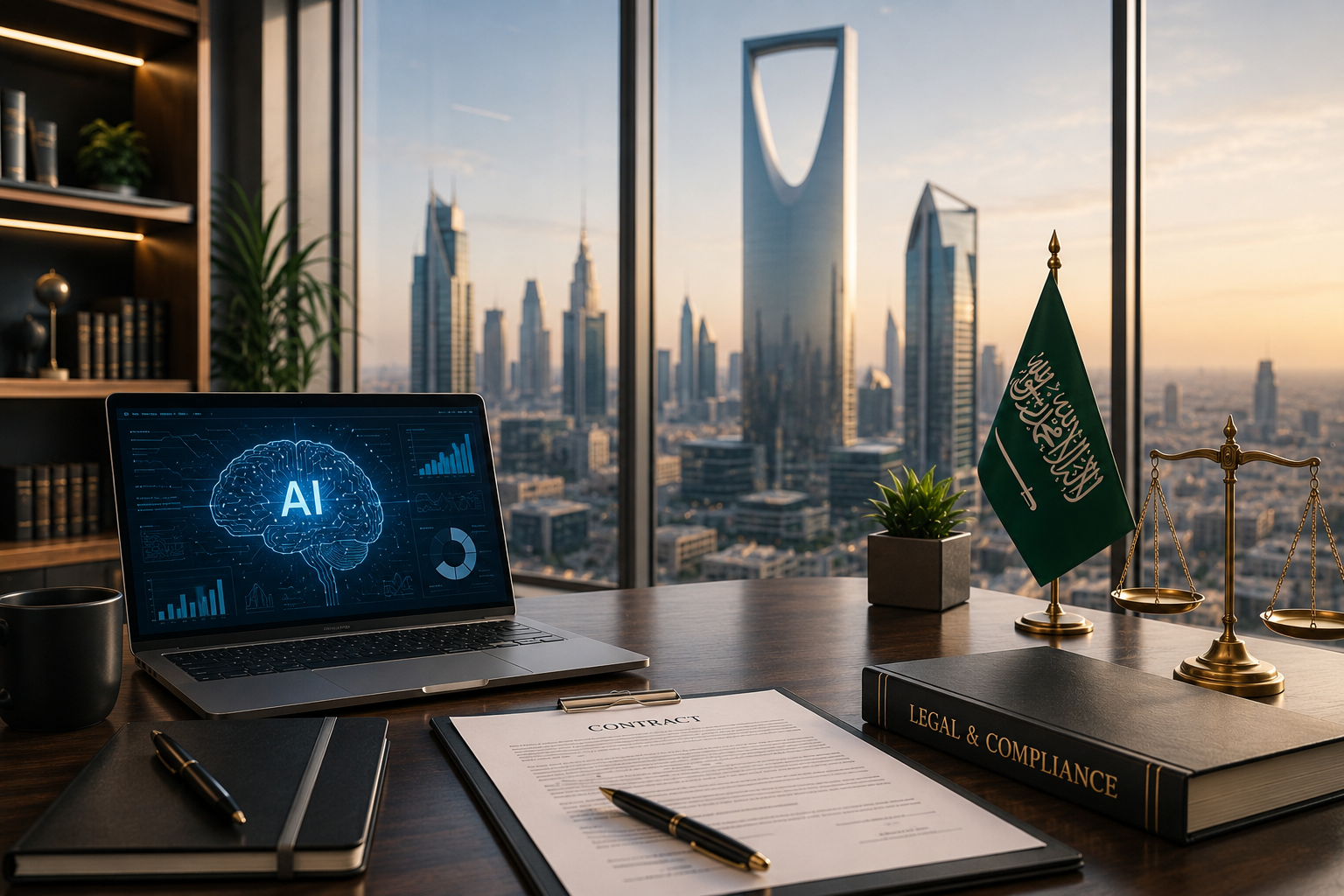


Artificial intelligence is no longer simply a technology of the future. It has become an increasingly important part of how businesses operate around the world. From customer service and data analysis to marketing, operations, and content creation, AI tools can help companies save time, improve productivity, and support better decision-making. In the Saudi business market, interest in artificial intelligence continues to grow as companies explore new ways to improve innovation, efficiency, and competitiveness. At the same time, Saudi Arabia has established national principles and regulatory frameworks aimed at supporting the responsible and secure use of AI. But with these opportunities come important questions for business owners: Can companies use artificial intelligence without creating legal risks? How can businesses protect customer data? Who is responsible when an AI system produces inaccurate information? And does a company need an internal policy for using AI? Artificial Intelligence Is Becoming Part of the Business Environment Companies can use artificial intelligence in many areas, including customer data analysis, administrative automation, customer service, market analysis, marketing, reporting, and product development. One of the main advantages of AI is its ability to process large amounts of information quickly, helping companies improve efficiency and make more data-driven decisions. However, the use of technology within a company should not be separated from its legal and regulatory responsibilities. As businesses become more dependent on artificial intelligence, they also need to understand how the information and data entered into these systems are collected, processed, stored, and used. Is Using Artificial Intelligence Legally Safe? The answer depends largely on how the company uses artificial intelligence. For example, using an AI tool to generate marketing ideas is very different from entering customer information, employee data, confidential contracts, or sensitive company information into an external AI system. Businesses should therefore consider the type of data being shared, the purpose for which it is being used, and the parties or systems that may process that information. Data protection and privacy are important considerations within Saudi Arabia's regulatory environment, particularly under the Personal Data Protection Law (PDPL) and its related framework. 1. Protect Customer and Employee Data One of the most important risks associated with AI is the improper handling of personal data. A company may use AI to analyze customer information, prepare reports, or support marketing campaigns. However, before entering any information into an AI system, the company should ensure that its use complies with applicable requirements. Data that can be linked to an identifiable individual requires particular attention, including customer information, employee information, contact details, and other personal data. Businesses should establish clear controls over how personal data is collected, shared, processed, and stored when using AI technologies. 2. Do Not Enter Confidential Company Information Into Any AI Tool One common mistake businesses can make is using AI tools without considering what information is being shared with them. This may include: Contracts. Financial information. Customer data. Business strategies. Expansion plans. Employee information. Product information. Confidential commercial data. Companies should therefore clearly identify which information can be used with AI tools and which information must remain within their internal systems. An internal AI policy can help employees understand these boundaries. 3. Intellectual Property and Content Rights Artificial intelligence can help companies create text, images, marketing materials, ideas, and other forms of content. However, this does not automatically mean that every AI-generated result can be used without review. Businesses should pay attention to intellectual property rights when using, modifying, or reproducing content that may be protected. AI-generated content should also be reviewed by a human before publication, particularly when it relates to the company's brand, commercial materials, contracts, or legal documents. The use of AI should support creativity and productivity without exposing the company to unnecessary intellectual property risks. 4. Artificial Intelligence Does Not Eliminate Human Responsibility Another common mistake is treating AI-generated information as automatically accurate. AI systems can produce inaccurate information, incomplete answers, or inappropriate recommendations. For this reason, human review remains essential, especially when AI outputs are used to support important business decisions. A company should not assume that responsibility disappears simply because an AI system generated the information. This is why responsible AI practices emphasize concepts such as accountability, responsibility, transparency, reliability, and security. Human oversight should remain an important part of the company's AI strategy. 5. Create a Clear Internal AI Policy AI use within a company should not be completely unstructured. Businesses can establish an internal policy that defines: Which AI tools employees are allowed to use. What types of data can be entered. What information must not be shared. Which employees are authorized to use AI systems. How AI-generated content should be reviewed. Who is responsible for reviewing AI outputs. How AI can be used in business operations. A clear policy helps employees understand what is permitted and reduces the risks associated with unauthorized or careless use of AI. 6. Assess AI Risks Before Implementation Companies should not adopt an AI system without considering the risks associated with its use. Before implementing an AI solution, businesses should evaluate its purpose, the type of information it processes, the results it generates, and the potential impact on customers, employees, and the company itself. Saudi Arabia has also been developing frameworks focused on AI governance and risk management, reflecting the importance of identifying, assessing, managing, and continuously monitoring AI-related risks. This highlights an important shift from simply using artificial intelligence to using it in a responsible and structured way. 7. Contracts Are Becoming More Important in the AI Era If a company works with an AI service provider or uses an external platform to process information, the relevant agreements and contractual terms should be carefully reviewed. Businesses should pay attention to issues such as: Data ownership. Confidentiality. Data usage. Responsibilities of each party. Information security. Personal data processing. Intellectual property rights. Service termination. Data deletion. Clear contractual provisions can help protect the company and reduce potential risks when working with third-party AI providers. 8. Balance Innovation With Compliance Legal compliance should not prevent companies from benefiting from artificial intelligence. On the contrary, clear policies and procedures can allow businesses to adopt AI with greater confidence. A company that understands what it can use, how it can use it, what information can be shared, and who is responsible for reviewing AI-generated results is better positioned to benefit from the technology without creating unnecessary risks. How A2Z Business Supports Companies With AI-Related Legal Challenges As artificial intelligence becomes more integrated into the business environment, companies need to consider technology from both a business and legal perspective. At A2Z Business, we support business owners and companies in Saudi Arabia in understanding the legal and regulatory aspects of their operations, reviewing contracts and internal policies, identifying potential risks, and developing solutions that help protect their businesses as they grow and adopt new technologies. Benefiting from artificial intelligence is not only about choosing the right tool. It is also about creating a clear and responsible framework for using that technology within the company. Conclusion Artificial intelligence represents a significant opportunity for companies in Saudi Arabia to improve efficiency, develop services, support innovation, and achieve business growth. However, taking advantage of these opportunities requires awareness of the legal and regulatory risks associated with AI, particularly regarding data protection, privacy, intellectual property, contracts, accountability, and information security. The question should not simply be: Is my company using artificial intelligence? The more important question is: Is my company using artificial intelligence in a safe, responsible, and organized way that protects its business and supports sustainable growth? Artificial intelligence can be a powerful tool for business growth, but the best results come when innovation goes hand in hand with legal and regulatory awareness.